Hypoplastic left heart syndrome
Where'd You Go BernadetteHypoplastic left heart syndrome is the congenital condition Bee Branch was born with, requiring six operations in her first five years. In the novel, it is both a serious medical history and a dividing line between Bee’s sense of herself as healthy and her parents’ enduring memories of how uncertain her survival once seemed.
Diagnosis and Treatment
Bee explains that the condition meant several parts of her heart—the mitral valve, left ventricle, aortic valve, and aorta—had not developed completely. Her treatment involved three open-heart surgeries and three more operations for complications; the last was when she was five. Elgin Branch also describes the history as a half-dozen surgeries and notes that Bee spent her first five years intermittently at Seattle Children’s Hospital.
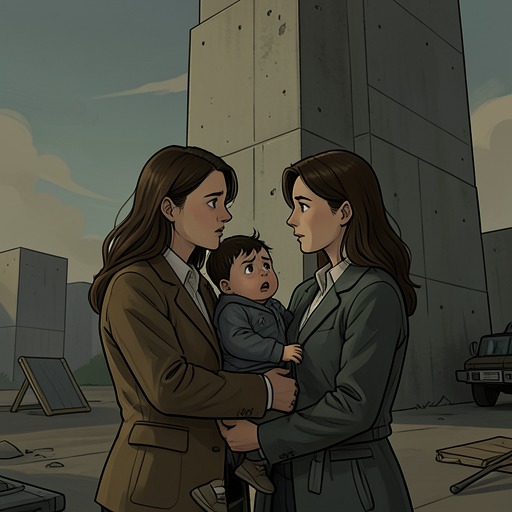
The early prognosis was grave. Bernadette Fox recalls that Bee’s chances of survival were minuscule and that, just after birth, Bee was taken for surgery before Bernadette could hold her. After the first operation, the family was told that Bee was not strong enough to undergo another at that time. Bee ultimately survived and received the further treatment her condition required, but the crisis established the intensity of her parents’ fear around her health.
Childhood and Later Health
Bee entered kindergarten on schedule even while her body struggled to keep up; during that period she was in the zero percentile for height and weight. Her parents’ decision not to pursue gifted-child testing was shaped partly by a wish for her to have some normalcy after the disruptions of her first five years. At Galer Street School, Bee was ahead academically and chose to help classmates learn to read and write; she continued to stay after school for homework help.
By the time Bee recounts her medical history, the last surgery is nine and a half years in the past. She describes herself as having been well for that entire interval and objects to being treated as sick when she feels entirely healthy. Her account makes a distinction between a congenital condition that demanded major treatment in early childhood and her present experience of living without its symptoms or limitations.
The distinction is complicated by annual trips to Seattle Children’s Hospital for echocardiograms and X-rays. Bee says that even her cardiologist questions the need for those tests. To Bee, the appointments do not restore memories of treatment she cannot recall; they instead make visible the gap between her parents’ continuing concern and her own conviction that she has been well for years.
Family Memory and Significance
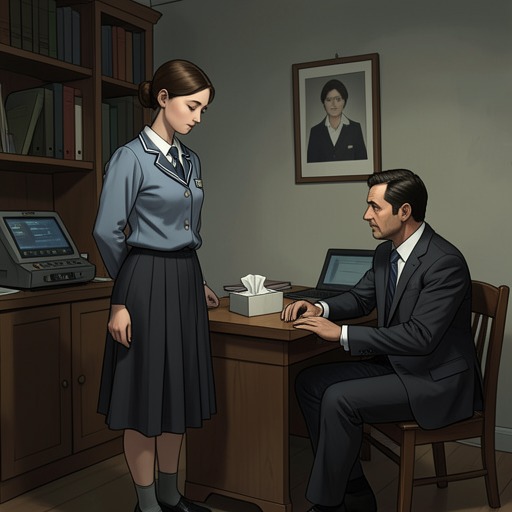
The hospital carries a different past for Bernadette. During the annual visits, ordinary details in its corridors—a poster or a ficus tree—bring back moments from Bee’s treatment, and Bernadette grips a chair and closes her eyes. Elgin holds her as he, too, becomes tearful. Bee, by contrast, remembers none of the operations and cannot understand why staff greet her as a survivor or show her baby photographs from the hospital. The same medical history is therefore a lived bodily fact for Bee, a remembered emergency for her parents, and a recurring setting for their unequal experiences of the past.
Bernadette gives Bee’s survival a spiritual meaning. At the incubator, she understands her daughter as a being entrusted to her and identifies her with Balakrishna; she names Bee Balakrishna on the birth certificate. Holding the Saint Bernadette Silver Locket, she promises God that she will never build again if Bee lives. The vow links the condition not only to the family’s fear but also to Bernadette’s renunciation of architecture, making Bee’s survival a turning point in her mother’s life as well as her own.
The novel presents the syndrome without reducing Bee’s character to it: Bee sees herself as healthy, intellectually capable, and largely untouched by memories of treatment, while her parents continue to carry the history as a source of fear and grief. That contrast shows how a childhood illness can remain consequential in a family even after the child’s immediate medical crisis has passed.